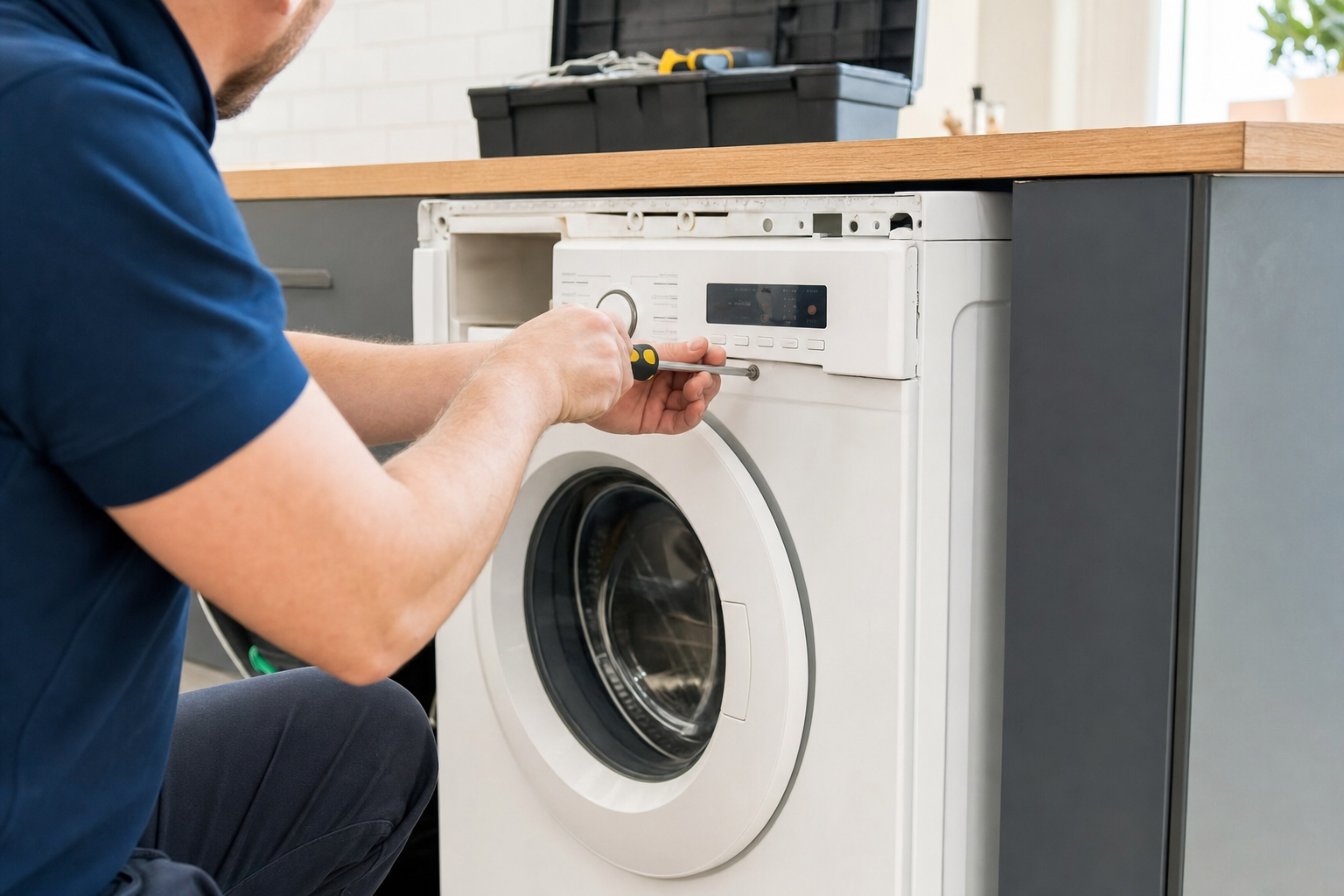
If you need appliance repairs in Beckenham, Safe Water Plumbing can help you work out what is likely wrong, what can be safely checked first, and whether a repair is the sensible option or if replacement may be the better long-term choice. We support homeowners, landlords and tenants with practical fault-finding for kitchen and utility appliances, including washing machine repair in Beckenham and dishwasher repair in Beckenham.
When an appliance starts leaking, refusing to drain, tripping electrics, leaving dishes dirty or stopping mid-cycle, the immediate question is usually the same: can it be repaired, or is it time for a replacement? This page is designed to help you make that decision with clear, local advice based on the sort of issues we regularly see in Beckenham, Shortlands and nearby parts of Bromley.
We often help customers who have noticed a slow leak under a machine, drainage problems, installation issues, or a fault that has appeared without warning. In many cases, the problem is not the appliance itself but a hose, joint, waste connection, inlet valve, filter, seal or external plumbing issue. That is why a proper diagnosis matters before anyone commits to a new appliance unnecessarily.
Call 020 3633 6712 or request a visit today if you want clear guidance on the next step.
Safe Water Plumbing works across Beckenham and nearby locations including Beckenham Junction, Kelsey Park, Beckenham High Street, Beckenham Place Park and Shortlands. If you are unsure whether your issue is a plumbing fault or an appliance fault, we can help you narrow it down and explain the practical repair options.
Washing Machine Repair in Beckenham
Washing machine faults can show up in a few different ways. Some are obvious, such as water pooling on the floor or the drum not spinning. Others are more subtle, like a longer wash cycle, poor drainage, unusual noise, a burning smell, or clothes coming out wetter than usual. In many homes, the first sign is a small leak that appears only when the machine is filling, draining or spinning.
For washing machine repair in Beckenham, the most useful first step is to identify whether the fault is caused by the appliance, the installation, or the connected pipework. Common causes include:
- Blocked or kinked drain hoses
- Faulty inlet hoses or loose connections
- Worn door seals or detergent drawer seals
- Blocked filters or pump issues
- Drainage problems in the waste connection
- Installation issues after a move or replacement
- Internal component faults affecting fill, spin or drain cycles
Brand names such as Hotpoint, Indesit, Beko, Bosch, Samsung, LG, Hisense, Candy, Hoover, Miele, Siemens, AEG, Neff, Smeg, Fisher & Paykel, Asko, Logik, Russell Hobbs, Montpellier and Sharp all have their own layouts and fault patterns, but the decision process is similar: check the visible plumbing first, then assess whether the machine itself is worth repairing.
Signs a repair may be the right option:
- The appliance is otherwise in good condition
- The fault appears to be a hose, seal, filter or waste connection
- The machine is relatively new or mid-life
- The issue started after installation or movement
- The repair is likely to be simpler than replacing the whole unit
Signs replacement may be worth considering:
- The machine has repeated faults over a short period
- There is widespread corrosion, damage or age-related wear
- The drum, motor or control system appears to be failing
- Parts are difficult to source or the repair cost is close to a new appliance
- The appliance no longer suits the household’s needs
Before any decision is made, it helps to carry out safe checks: isolate the appliance if there is an active leak, avoid opening panels if you are unsure, and note when the fault happens. For example, a leak only during draining points in a different direction from a leak that appears while the machine is filling.
In a recent local enquiry in Beckenham, the customer needed help understanding an appliance repair issue. The aim was to describe typical diagnosis, safe checks and practical next steps without making any unsupported claims about the specific job. That approach is often the most helpful one: identify the symptom, check the surrounding plumbing, then decide whether a targeted repair is sensible.
If you are a landlord, it is especially useful to document the fault, the checks carried out and whether the issue is appliance-related or installation-related. For tenants, it can help to avoid guesswork and reduce delays in getting the right person involved. For homeowners, it can prevent unnecessary replacement when a simple plumbing or connection issue is to blame.
Dishwasher Repair in Beckenham
Dishwashers often fail in ways that point either to the appliance itself or to the connected water and waste system. A dishwasher that will not drain, leaves standing water, smells unpleasant, leaks from underneath, or does not clean properly may have a blocked filter, a waste connection problem, a faulty inlet, or an issue with the spray system or pump.
For dishwasher repair in Beckenham, the most common symptoms we see include:
- Water left in the base after a cycle
- Leaks from the front, sides or underneath
- Dishes coming out dirty or cloudy
- The machine stopping part-way through a cycle
- Drainage faults or slow emptying
- Installation issues after a kitchen fit-out or replacement
- Noisy operation or unusual vibrations
Likely causes can include:
- Blocked filters or trapped debris
- Kinked or poorly routed waste hoses
- Loose compression or waste connections
- Door seal wear or poor door alignment
- Faults with the drain pump or inlet valve
- Low water pressure or supply issues
- Problems with the appliance installation rather than the machine itself
We also see situations where a dishwasher leak seems to be the appliance’s fault, but the real issue is nearby pipework or a joint below the sink. That is why it is important to look at the whole setup, not just the machine in isolation.
Repair is usually more sensible when:
- The fault is limited to a seal, hose, filter or connection
- The appliance is still in usable condition overall
- The problem appeared suddenly rather than after years of decline
- The appliance is a recognised model with parts that are still available
- The issue is caused by installation, drainage or water supply conditions
Replacement may be the better choice when:
- The appliance has repeated electronic or mechanical failures
- There is significant water damage or internal corrosion
- The repair is extensive and the appliance is near the end of its life
- The cost of repair does not make financial sense compared with a new unit
For households near Beckenham High Street, Kelsey Park or Beckenham Junction, where kitchens and utility spaces can vary widely in age and layout, the installation itself can sometimes be the real cause of the problem. A dishwasher that was fitted with a poor waste connection, for example, may keep showing drainage issues until the pipework is corrected.
In another local support case, a slow leak in a shower area in Bromley was checked by looking at the seals, waste and exposed pipework before the customer received clear repair options. The same principle applies to dishwashers: check the visible and connected plumbing before deciding the appliance is beyond repair.
Repair vs Replacement: How to Decide
The repair-versus-replacement decision should be based on the fault, the age and condition of the appliance, the likely cost of parts and labour, and whether the issue is isolated or part of a wider pattern. A good rule is to compare the value of a proper repair with the remaining useful life of the appliance.
Here are the main decision points we encourage customers to think about:
- Age of the appliance: newer appliances are often worth repairing if the fault is specific and manageable.
- Nature of the fault: hoses, seals, filters and waste connections are usually more practical to repair than major electronic or motor faults.
- Frequency of breakdowns: repeated faults suggest a replacement may be more economical.
- Water damage risk: any active leak should be dealt with promptly to protect flooring, cabinets and nearby electrics.
- Availability of parts: if parts are difficult to source, replacement may be the faster path.
- Installation quality: some issues are caused by the original fitting rather than the appliance itself.
We always recommend a practical, property-first approach. If a machine is leaking into a kitchen cabinet, the priority is to stop the water, identify the source and protect the surrounding area. If the issue is a blocked waste line or a loose joint, that may be a straightforward repair. If the appliance has multiple faults and is already near the end of its life, replacement may be the more cost-effective option.
For landlords, this decision often comes down to reducing repeat callouts and avoiding water damage. For tenants, it is about getting a clear answer quickly. For homeowners, it is about balancing short-term repair cost against long-term reliability.
What We Check During an Appliance Repair Visit
Every appliance repair starts with safe, visible checks. Depending on the fault, that may include looking at the water supply, waste hose, drainage route, seals, filters, fittings and surrounding pipework. If the appliance is leaking, we first identify whether the water is coming from the machine, the connections, or nearby plumbing.
A typical diagnostic process may include:
- Checking when the fault occurs during the cycle
- Looking for visible leaks, drips or signs of past water damage
- Inspecting hoses, waste connections and inlet points
- Checking filters, traps and drainage paths
- Assessing whether the appliance appears to have been installed correctly
- Explaining whether the likely fix is repair, adjustment or replacement
This style of diagnosis is especially useful in older properties and mixed-use homes around Beckenham and Shortlands, where appliances may have been moved, reinstalled or connected to pipework that has changed over time. A fault that looks like an appliance failure may actually be caused by a restricted drain or a loose connection.
Aftercare and Preventing Repeat Faults
Once the immediate issue has been resolved, aftercare matters. Many repeat faults happen because the underlying cause was not addressed, or because the appliance is being used in a way that puts extra strain on the same part.
Simple aftercare steps include:
- Keep filters clean and check them regularly
- Watch for early signs of leaks around hoses and joints
- Do not overload washing machines or dishwashers
- Use the correct detergent and avoid excess suds
- Check waste hoses are not kinked or crushed
- Act quickly if you notice unusual noise, smell or standing water
If the problem was linked to installation, it is worth making sure the appliance is level, the hoses are routed correctly and the waste connection is secure. In rented homes, keeping a clear note of what was found and what was repaired can help avoid confusion later.
Safe Water Plumbing also supports related plumbing and heating work where appliance faults overlap with other services, including plumber, emergency plumbing, boiler repairs, boiler installations, central heating, underfloor heating, gas engineers and water leaks. If your appliance issue turns out to be part of a wider water supply or drainage problem, we can help you understand the next step.
Local Appliance Repairs Support in Beckenham
Our work is focused on local, practical support rather than generic advice. That means helping customers in Beckenham, Shortlands and nearby areas understand what the fault means, what can be checked safely, and whether the best answer is repair or replacement. We also recognise that many appliance problems happen in busy households where time, space and water damage risk all matter.
Whether you are near Beckenham Place Park, commuting via Beckenham Junction, or running a household close to Beckenham High Street, a leaking or unreliable appliance can quickly become disruptive. We aim to give clear advice, service-specific support and practical repairs without overcomplicating the process.
Safe Water Plumbing is listed on Google Business Profile and 192.com, and our local service information is available via our business presence online. If you want to speak to us about a washing machine fault, dishwasher fault, leak from an appliance, drainage problem or installation issue, call 020 3633 6712 or email info@plumbers-beckenham.co.uk.
Call 020 3633 6712 or request a visit today. We’ll help you assess the fault, decide whether a repair is worthwhile, and plan the next step with as little disruption as possible.